----News
Precision Boron Halides: Ultra-High Purity BF3, BCl3, and BBr3 (Up to 6N) for Advanced Semiconductor Doping and Fine Chemical Synthesis
Date: 2026-07-22
In high-tech industrial chemistry, boron halides—specifically Boron Trifluoride (BF3), Boron Trichloride (BCl3), and Boron Tribromide (BBr3)—function as essential Lewis acid catalysts, dry etching agents, and p-type semiconductor dopants. As sub-5nm microelectronic fabrication processes and high-selectivity pharmaceutical synthesis routes demand higher reproducibility, managing trace chemical impurities within these reactive reagents has become a critical operational priority.
While standard technical-grade reagents suffice for basic industrial reactions, microelectronics, lithium-ion battery electrolyte formulations, and active pharmaceutical ingredient (API) manufacturing require rigorous purity controls. Uncontrolled moisture, oxygen, or trace metal contamination in boron halides leads to yield loss, equipment corrosion, or unwanted side reactions. Selecting the correct purity grade matching specific industrial criteria is crucial for maintaining process stability.
Chemical Dynamics and Industrial Role of Boron Halides
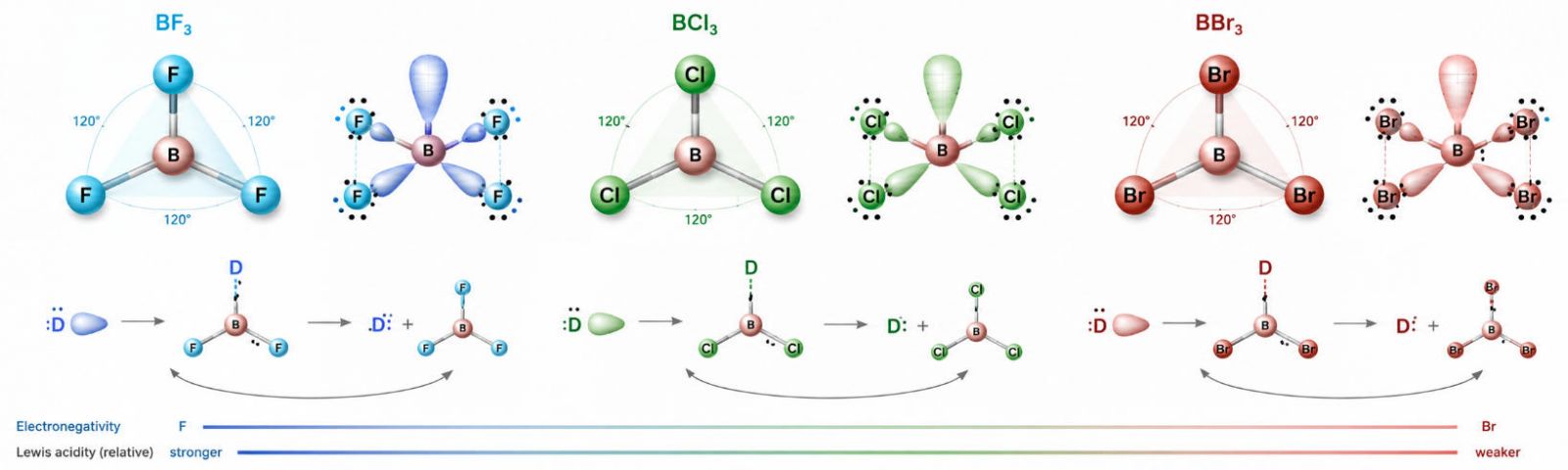
Boron halides are strong Lewis acids due to the electron deficiency of the central boron atom, which possesses an vacant p-orbital capable of accepting electron pairs. This fundamental structural property governs their reactivity across industrial processes:
- Boron Trifluoride (BF3): A gaseous Lewis acid used extensively in alkylation, esterification, and polymer condensation reactions, as well as a key raw material for specialty fluorinated compounds and electrolyte additives like lithium tetrafluoroborate (LiBF4).
- Boron Trichloride (BCl3): A gas widely utilized in plasma-assisted reactive ion etching (RIE) of aluminum interconnects in microchip manufacturing and as a reagent in boron nitride chemical vapor deposition (CVD).
- Boron Tribromide (BBr3): A liquid Lewis acid recognized for selective ether cleavage (demethylation) in complex natural product synthesis and as a liquid boron diffusion source in p-type silicon wafer solar cell production.
Cross-Verified Scientific Literature Sources (General Reactivity):
- 1. Olah, G. A., et al. (1991). Friedel-Crafts Chemistry. John Wiley & Sons. (Validates Lewis acidity mechanisms of BF3, BCl3, and BBr3).
- 2. Cotton, F. A., Wilkinson, G., et al. (1999). Advanced Inorganic Chemistry (6th ed.). Wiley-Interscience. (Confirms structural orbital configurations and hydrolysis reactions).
- 3. CRC Handbook of Chemistry and Physics (104th ed., 2023-2024). (Verifies thermodynamic constants, boiling points, and vapor pressure curves).
Technical Purity Specifications and Application Grade Alignment
Selecting the appropriate grade requires balancing process sensitivity against economic efficiency. The table below details the available purity tiers and primary industrial fields for each boron halide compound:
| Chemical Product |
Available Purity Tiers |
Key Impurity Thresholds |
Primary Target Applications |
| Boron Trifluoride (BF3) |
99.5%, 99.9%, 99.99% (4N) |
Moisture < 20 ppm, SO2 < 10 ppm (4N Grade) |
Lithium Battery Electrolytes (LiBF4), Polymerization Catalyst, Hydrocarbon Cracking |
| Boron Trichloride (BCl3) |
99.9%, 99.99% (4N) |
Free Cl2 < 5 ppm, Phosgene < 10 ppm, Metals < 1 ppm |
Semiconductor Plasma Etching (RIE), Boron Nitride Thin-Film CVD, Fine Intermediate Synthesis |
| Boron Tribromide (BBr3) |
99.9%, 99.99%, 99.9999% (6N) |
Trace Heavy Metals < 10 ppb (6N Grade), Free Br2 < 100 ppm |
Solar Cell Diffusion Doping, High-Yield Ether Demethylation in Pharmaceutical Manufacturing |
1. Boron Trifluoride (BF3) Engineering Application Focus
Boron Trifluoride (CAS: 7637-07-2) operates as a catalyst in organic synthesis. In petrochemical processing, technical grade (99.5%) drives the oligomerization of polyalphaolefins (PAO). Higher purity grades (99.9% and 99.99%) are mandatory in the synthesis of electronic-grade lithium battery salts, such as LiBF4, where trace moisture leads to hydrofluoric acid formation, impairing battery lifecycle performance.
Cross-Verified Sources for BF3:
- 1. IUPAC Compendium of Chemical Terminology (Gold Book). "Lewis Acids in Catalysis." https://doi.org/10.1351/goldbook
- 2. Xu, K. (2004). Nonaqueous Liquid Electrolytes for Lithium-Based Rechargeable Batteries. Chemical Reviews, 104(10), 4303-4418. (Verifies LiBF4 purity requirements).
- 3. U.S. National Institute of Standards and Technology (NIST) Chemistry WebBook, SRD 69: Boron Trifluoride.
2. Boron Trichloride (BCl3) Plasma Etching and CVD Dynamics
Boron Trichloride (CAS: 10294-34-5) is used in microelectronics. During plasma etching of aluminum films, BCl3 scavenges native aluminum oxides (Al2O3) by forming volatile oxychlorides, exposing the underlying metal for precise anisotropic etching. For 99.99% (4N) electronic grade BCl3, strict limits on phosgene (COCl2) and trace metals are enforced to prevent defect propagation on silicon wafers.
Cross-Verified Sources for BCl3:
- 1. Coburn, J. W., & Winters, H. F. (1979). Plasma etching—A discussion of mechanisms. Journal of Vacuum Science & Technology, 16(2), 391-403.
- 2. Semiconductor Equipment and Materials International (SEMI) Standards: SEMI C3.16 - Standard for Boron Trichloride. SEMI Official Guidelines
- 3. National Center for Biotechnology Information (NCBI). PubChem Compound Summary for CID 25134, Boron Trichloride.
3. Boron Tribromide (BBr3) Semiconductor Diffusion and Demethylation
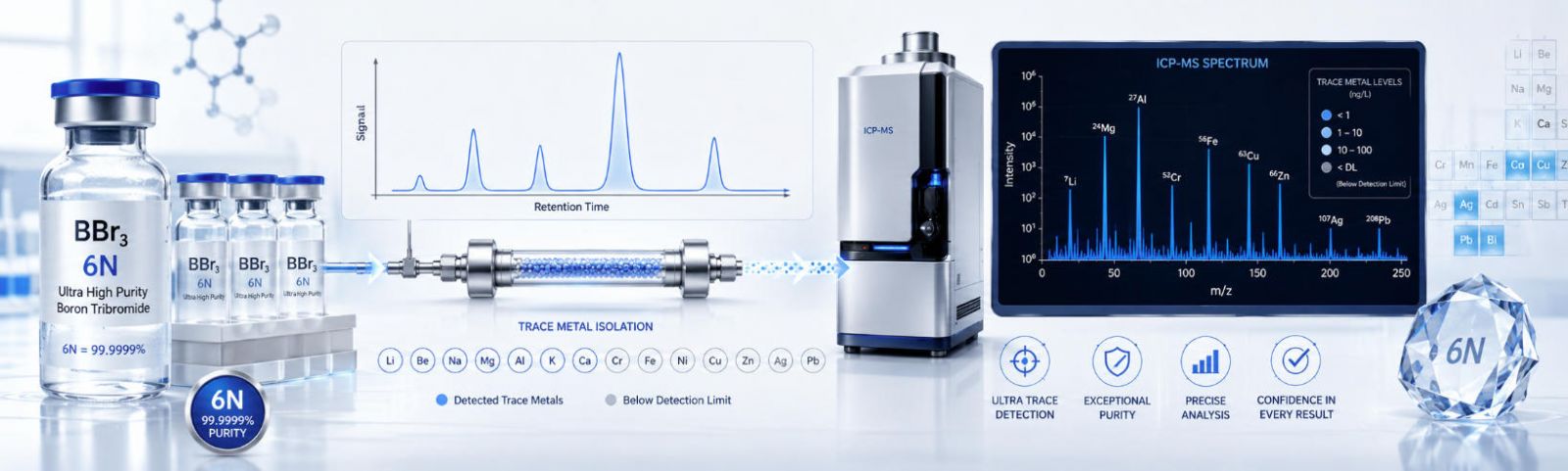
Boron Tribromide (CAS: 10294-33-4) provides high precision in both semiconductor physics and active pharmaceutical ingredient (API) synthesis. In p-type silicon cell manufacturing, liquid BBr3 serves as a dopant carrier, vaporized at controlled temperatures to introduce boron atoms into the silicon lattice. Ultra-high purity 99.9999% (6N) grades ensure that transition metal impurities (such as iron, nickel, or copper) remain below parts-per-billion (ppb) levels to prevent carrier recombination losses. In fine chemistry, BBr3 selectively cleaves aryl-methyl ethers under mild conditions without disturbing delicate molecular frameworks.
Cross-Verified Sources for BBr3:
- 1. McOmie, J. F. W., & West, D. E. (1969). Demethylation of Aryl Methyl Ethers with Boron Tribromide. Organic Syntheses, Coll. Vol. 5, p. 412.
- 2. Bentzen, J. J., et al. (2014). High-Efficiency Silicon Solar Cells: Boron Diffusion Dynamics using BBr3. Solar Energy Materials and Solar Cells, 130, 260-268.
- 3. European Chemicals Agency (ECHA) Registration Dossier: Boron Tribromide (EC 233-657-9). ECHA Public Database
Packaging Verification, Handling Safety, and Supply Logistics
Boron halides react vigorously with ambient moisture to yield corrosive mineral acids (HF, HCl, or HBr). Consequently, product transport and storage mandate rigorous container integrity:
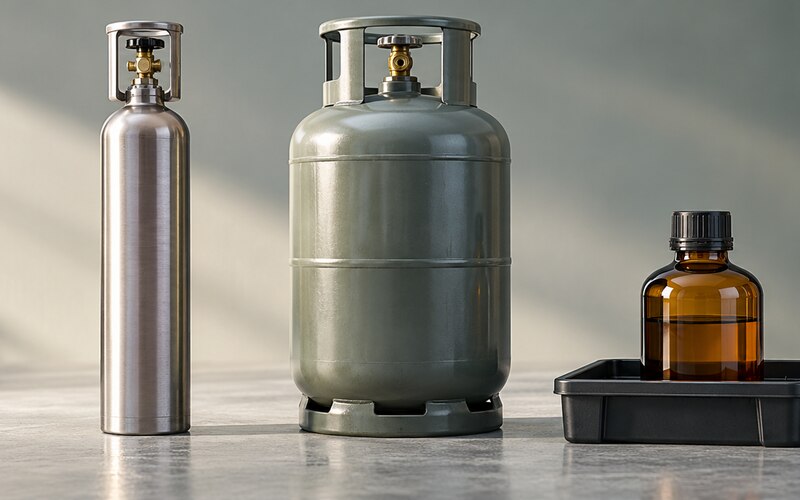
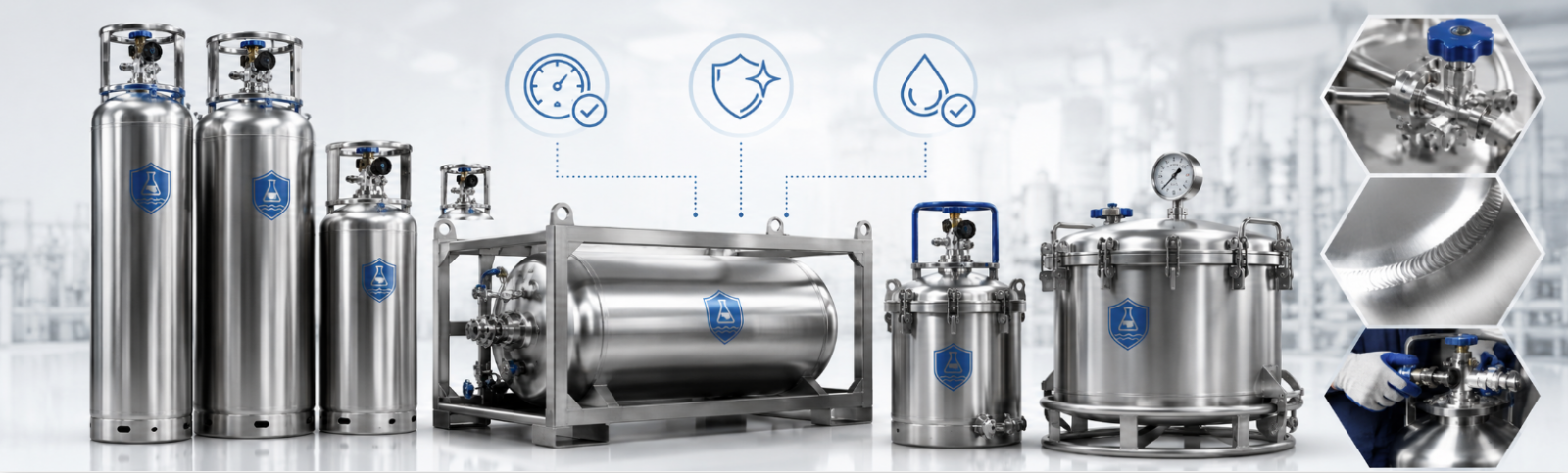
- Dry Cylinder Conditioning: Gaseous BF3 and BCl3 are supplied in seamless steel or nickel-alloy high-pressure cylinders pre-passivated to maintain internal dryness below 5 ppm H2O.
- Hermetic Liquid Vessel Engineering: Liquid BBr3 is packaged in quartz ampoules, Teflon-lined containers, or specialized stainless steel bubblers under an inert dry nitrogen blanket to prevent oxidation and color degradation.
- Analytical Validation: Every batch undergoes full analytical testing via Inductively Coupled Plasma Mass Spectrometry (ICP-MS) for trace metals and Gas Chromatography (GC) for gaseous volatile impurities, accompanied by detailed Certificates of Analysis (COA).
Frequently Asked Questions
1. Why is 99.9999% (6N) purity specified for Boron Tribromide in semiconductor diffusion?
In semiconductor and photovoltaic wafer processing, trace metal contaminants like Fe, Cu, or Cr act as carrier recombination centers, reducing device efficiency. A 6N purity level guarantees that metallic impurities remain under sub-ppm or ppb thresholds, protecting electronic yields.
2. How does Boron Trifluoride function in lithium battery electrolyte production?
High-purity BF3 (99.99%) serves as a core reactant in the synthesis of lithium tetrafluoroborate (LiBF4) and related additive salts, which enhance low-temperature discharge performance and thermal stability in lithium-ion battery cells.
3. What is the primary operational advantage of BBr3 over BCl3 in ether cleavage reactions?
BBr3 features stronger Lewis acidity and longer, more polar B-X bonds compared to BCl3. This allows for complete ether cleavage (demethylation) at reduced temperatures (-78°C to 0°C), minimizing unwanted side reactions in complex functionalized molecules.
4. What quality control procedures prevent moisture degradation in boron halide shipments?
Containers undergo vacuum baking, helium leak checks, and nitrogen purging prior to filling. Final products are sealed under positive pressure with specialized corrosion-resistant valves to prevent ambient moisture ingress during international transit.
Sourcing Technical Boron Halide Solutions with Biochem
Procuring specialty inorganic chemicals requires strict quality assurance and reliable logistics. Biochem provides verified grades of Boron Trifluoride, Boron Trichloride, and Boron Tribromide tailored for semiconductor fabrication, electronic gas formulation, and fine chemical manufacturing.
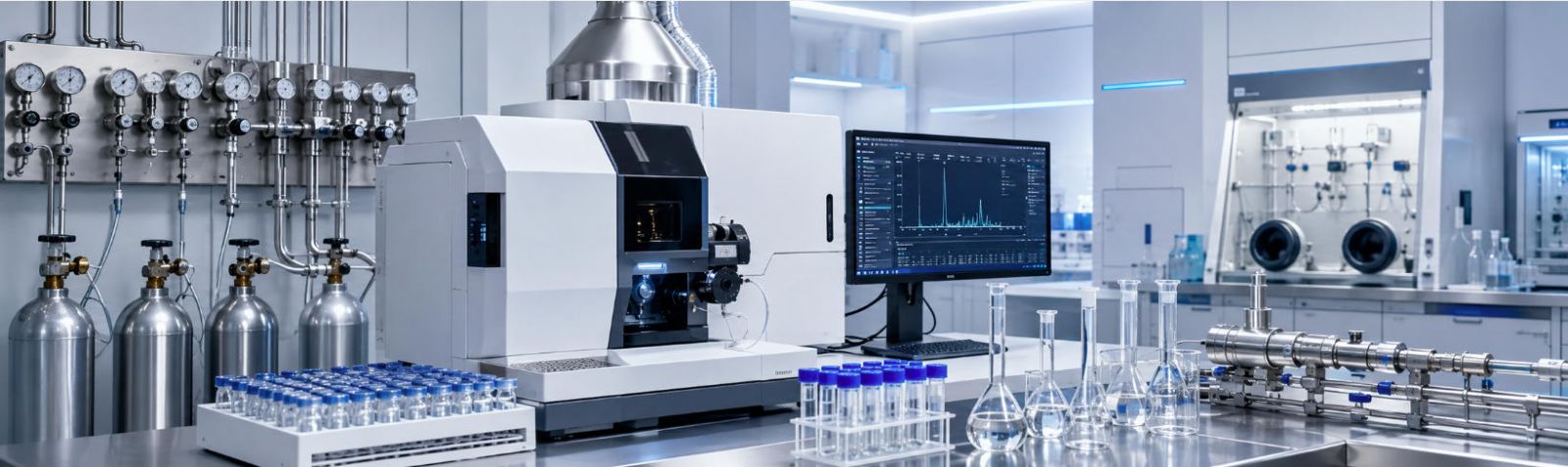
Our operational capabilities cover the complete range from industrial catalyst grades up to 99.9999% (6N) ultra-pure electronic grades. Supported by rigorous analytical testing, batch traceability, and international compliance documentation, Biochem delivers consistent chemical supplies to global research institutions and commercial industrial facilities.
Corporate Web Portal:
Official Domain:
www.biochemjx.cn
Technical Inquiry Desk: High-Purity Boron Halide Series
Product Availability Tiers:
BF3: 99.5%, 99.9%, 99.99%
BCl3: 99.9%, 99.99%
BBr3: 99.9%, 99.99%, 99.9999% (6N)
Quality Verification:
Compliance: COA Per Batch, ICP-MS Metal Profiles
Packaging: Custom Pressure Vessels, Stainless Steel Bubblers
Return