

A certificate of analysis (COA) describes a tested batch at a defined point in time. For boron halides, the more useful purchasing question is what can be demonstrated after that point: which material was filled into which package, how it was received, and whether the delivered form fits the intended process. A high purity figure matters, but it cannot answer those questions alone.

Jiangxi Biochem's boron series lists three products. Their catalog purity ranges should be read alongside their different physical forms and the specification agreed for a particular order.
A gas, with 99.5%, 99.9% and 99.99% grades listed. Confirm the exact supplied form, package and COA basis before comparing offers. A named grade does not itself define the use-point interface.
Listed at 99.9% and 99.99%. Its gas or liquefied-gas presentation makes the agreed package, documentation and receiving interface part of a meaningful quotation.
A fuming liquid; the catalog lists 99.9%–99.9999%. Its liquid delivery format calls for its own package and receipt review, not an assumption carried over from the gases.
A useful COA identifies the batch, reported analytes, method or measurement basis, units and relevant limits. Its result applies to the sample and conditions represented by that report. It does not automatically establish the state of every container at receipt or the material presented to a tool or reactor. That distinction does not mean a sealed shipment necessarily changes in transit; it means the buyer should define what evidence closes the gap for the intended use.
| Checkpoint | Question to settle | Evidence to request or agree |
|---|---|---|
| Release | Does the grade cover the impurities that matter to this application? | Lot-specific COA, methods, reporting limits and agreed specification. |
| Filled package | What is the delivered form, quantity and container configuration? | Package schedule, identity/lot traceability and supplier's current SDS. |
| Receipt | Do labels, lot and documents match the order and acceptance plan? | Receiving record, seal/status check and document reconciliation. |
| Point of use | What validation does this particular process require? | User-defined qualification, interface approval and any agreed incoming or use-point tests. |
Two quotations with the same headline assay can produce different project costs. One may omit the required container format, documentation detail, destination paperwork or return terms. Another may meet the nominal purity but leave a process-critical analyte unspecified. Delays can then arise in technical review, receiving or qualification, even when the material itself is in specification.
The practical comparison is the total cost of qualified supply: the chemical, agreed package, freight and any return arrangement, the data needed for release, and the time required to make the delivered material acceptable at the site. There is no universal ranking of BF3, BCl3 and BBr3 on these dimensions; the target process, destination and accepted evidence determine it.
Jiangxi Biochem Co., Ltd. describes its business as a CDMO and chemical sourcer, and its site lists the three boron halides above. Buyers can send a single application-led brief so the exact grade, available supply format, documentation and commercial terms can be confirmed for a specific inquiry. The product listing is a starting point for that discussion; current availability and capabilities must be checked against the quotation and supplier documents.
Send the CAS number, grade, application, key analytes, package requirement, target quantity and destination. Ask for a current, lot-relevant document set and confirm any testing or packaging requirement before ordering.
Jiangxi Biochem Co., Ltd.
Email: iceleng@biochemjx.com | Tel: +86-791-86629460
Website: www.biochemjx.cn
A 99.99% boron trifluoride (BF3) COA reports the tested batch against specified analytes and conditions. The buyer still needs lot and package matching, an agreed acceptance plan and any application-specific incoming or use-point evidence.
Boron trichloride (BCl3) is listed as a gas/liquefied-gas product. An RFQ should identify the intended delivery format, package size and site interface so the supplier and buyer can confirm compatibility and documentation before the order is placed.
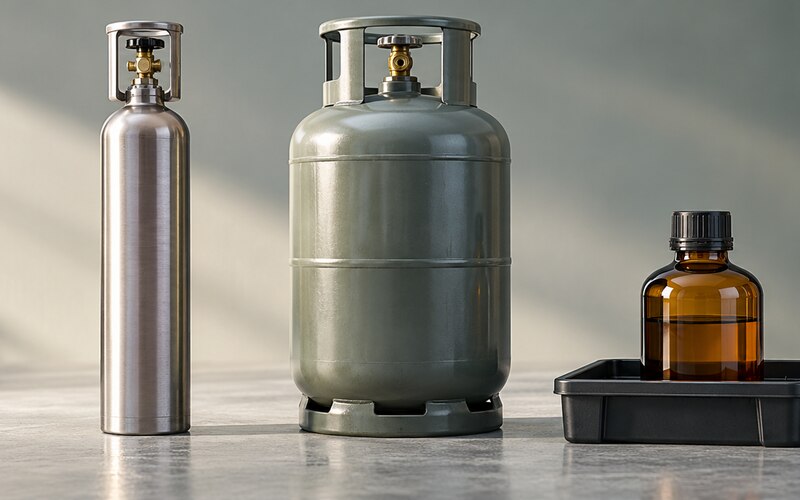
Boron tribromide (BBr3) is a fuming liquid, while boron trifluoride (BF3) is a gas and boron trichloride (BCl3) may be supplied as a gas/liquefied gas. The current quotation and SDS should define the actual package for each product.
For boron trifluoride (BF3), boron trichloride (BCl3) and boron tribromide (BBr3), there is no single universal impurity panel for all uses. Buyers should identify process-sensitive species and reporting limits with their technical team, then request an agreed product-specific specification and analytical basis.
For boron trifluoride (BF3), boron trichloride (BCl3) and boron tribromide (BBr3), compare the price of the qualified order: grade, package, shipment, documentation, qualification effort, lead time and any return terms. A unit price alone cannot show those differences.
No. Boron trifluoride (BF3), boron trichloride (BCl3) and boron tribromide (BBr3) are distinct substances with different CAS numbers and specifications. Each order needs its own product- and lot-relevant documentation.
Author's note: This article is an editorial procurement guide based on the linked public sources, reviewed on 23 October 2026. The images are illustrations. No batch was independently sampled or tested for this article. Product grade, package, documentation, safety requirements, import rules and availability must be verified for each order with the current supplier materials and the buyer's qualified team.
Topics: #BoronTrifluoride #BoronTrichloride #BoronTribromide #BoronHalides #ChemicalSourcing #CertificateOfAnalysis #SpecialtyGases #B2BProcurement
Latest Blogs & News
Products
Contact us
Add: 1-6F, No.118 Xinzhou Road, Xihu District, Nanchang, Jiangxi, China Post: 330025
Tel:+86-791-86629460
E-mail: iceleng@biochemjx.com