
In modern fine chemical manufacturing and semiconductor processing, steering electrophilic pathways requires total control over Lewis acid strength. When balancing catalytic activity against structural selectivity, process chemists frequently rely on boron halides. However, choosing between these reagents involves navigating conflicting kinetic constraints and complex thermodynamic realities.
The reactivity profile of the boron trihalide series presents a classic paradox that defies simple electronegativity trends. While structural intuition suggests that fluorine's high electronegativity should make the boron center intensely electron-deficient, structural p-orbital back-bonding actually weakens its net acidity. Mastering these electronic nuances is essential for avoiding catastrophic yield loss during scale-up operations.
The electronic configurations of boron trihalides dictate their unique reactive characteristics. Strong planar back-bonding occurs between the filled p-orbitals of the halogen atoms and the vacant 2p-orbital on the boron atom. This spatial overlap is highly efficient in Boron Trifluoride due to matching orbital sizes, effectively softening its localized electrophilic character.
As you move down the group to Boron Trichloride and Boron Tribromide, the larger 3p and 4p orbitals match poorly with boron's compact 2p shell. This mismatch minimizes back-donation, leaving the boron center exceptionally electron-deficient. Consequently, the true kinetic Lewis acidity follows a distinct trend: BF₃ < BCl₃ < BBr₃.
.png)
Selecting the optimal boron halide variant requires matching the target bond-cleavage energy with the correct physical phase properties of the reagent matrix.
For large-scale polymerizations or continuous alkylation reactions, ultra-pure Boron Trifluoride (99.99% Boron) serves as a highly specialized gaseous catalyst, often handled as an etherate adduct for ease of dosing. When synthetic routes demand the clean cleavage of stubborn aryl-alkyl ethers or selective deprotection of complex pharmaceutical intermediates, the liquid phase hydrodynamics of Boron Tribromide provide the necessary kinetic energy to break stable carbon-oxygen bonds at sub-zero temperatures without disturbing delicate chiral centers.
| Chemical Compound Matrix | Specified Purity / Assay | Physical State (at 25°C) | Primary High-Value Industrial Application |
|---|---|---|---|
| Boron Trifluoride (BF₃) | 99.99% Boron Gas | Compressed Gas | Semiconductor ion implantation, stereospecific polymerization |
| Boron Trichloride (BCl₃) | ≥ 99.9% Technical Grade | Liquefied Gas | Aluminum alloy refining, pharmaceutical Friedel-Crafts catalyst |
| Boron Tribromide (BBr₃) | ≥ 99.9% High Purity | Fuming Liquid | Selective ether cleavage, dealkylation of complex APIs |
.png)
Deploying powerful Lewis acids like Boron Trichloride or Boron Tribromide requires managing competing pathways. Both reagents exhibit extreme sensitivity to moisture. Exposure to trace atmospheric water vapor triggers rapid, exothermic hydrolysis, generating corrosive hydrogen halides (HCl or HBr) along with boric acid residues.
.png)
To preserve chemical integrity, process systems must operate under a continuous, ultra-dry inert gas envelope (nitrogen or argon). Reactor metallurgy must also be carefully selected; the aggressive electrophilic complexes generated by BBr₃ can strip protecting groups from common alloy components, requiring the use of specialized glass-lined vessels or fluoropolymer-shielded lines to ensure long-term system stability.
Advanced chemical synthesis allows no room for structural variance. Securing reliable batch-to-batch selectivity across high-value compound lines requires utilizing reagents with precise impurity controls. At Jiangxi Biochem Co., Ltd., we deliver specialized boron chemistries designed to perform reliably under demanding operational protocols.
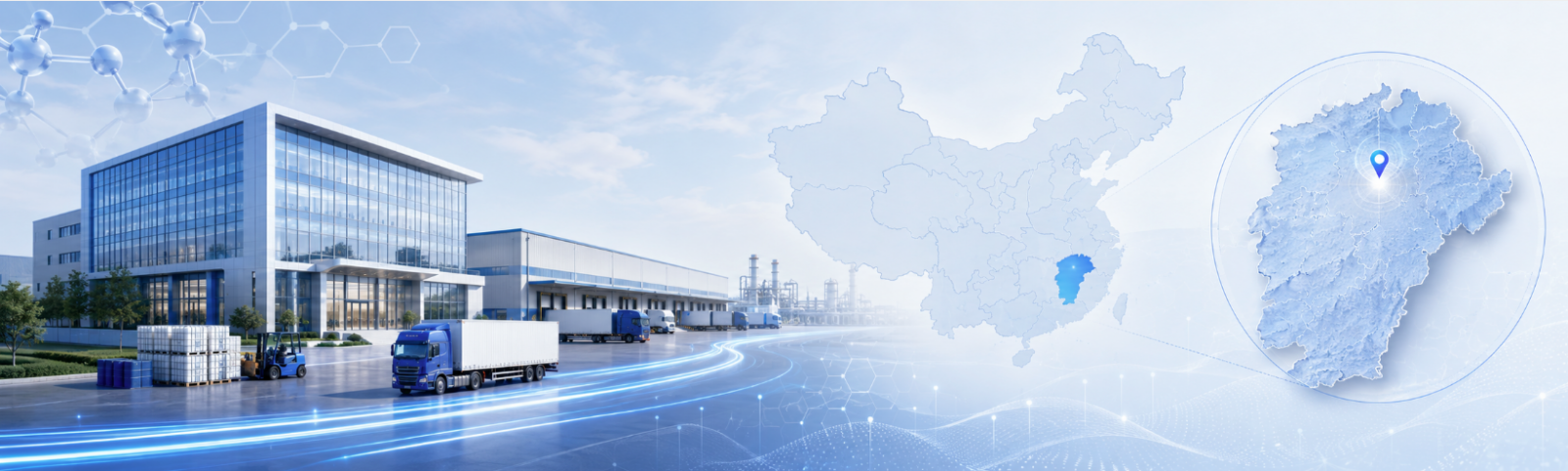
We specialize in supplying high-performance chemical components tailored for the global research and pharmaceutical development sectors. Our comprehensive Halide Series—featuring electronic grade Boron Trifluoride (99.99% Boron Gas), high-purity Boron Trichloride, and ultra-selective Boron Tribromide—is produced under strict quality parameters to ensure total batch consistency across demanding process networks.
Latest Blogs & News
Products
Contact us
Add: 1-6F, No.118 Xinzhou Road, Xihu District, Nanchang, Jiangxi, China Post: 330025
Tel:+86-791-86629460
E-mail: iceleng@biochemjx.com