
Achieving sub-parts-per-billion (ppb) ionic purity in modern industrial water treatment demands more than just standard filtration. Whether managing boiler feed water for high-pressure power utilities or manufacturing ultrapure water (UPW) for semiconductor fabrication plants, system efficiency relies entirely on the precise selection and deployment of ion exchange resins.
Engineering a high-efficiency system is an integrated balancing act involving kinetic limits, hydrodynamic pressures, and chemical regeneration parameters. When system design overlooks minor matrix shifts, plants frequently suffer from early ionic breakthrough, excessive regenerant chemical waste, and chronic fouling of organic matrices.
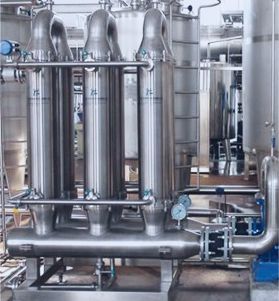
High-efficiency demineralization plants rely on a multi-stage layout where distinct resin beads handle targeted targets sequentially. Standard designs operate in a two-stage deionization train followed by deep polishing.
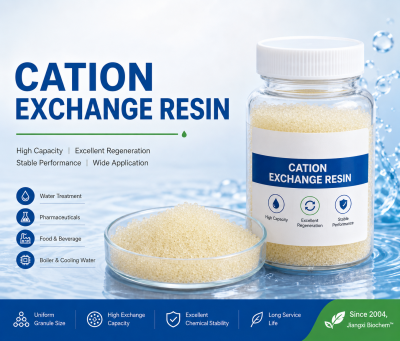
First, the raw influent passes through a Cation Exchange Resin column. This stage exchanges cations like Ca²⁺, Mg²⁺, and Na⁺ for Hydrogen ions (H⁺), shifting the water matrix into a highly acidic mineral state. Next, the acidic effluent flows into an Anion Exchange Resin bed. Here, functional alkaline exchange sites strip out problematic anions like Cl⁻, SO₄²⁻, and reactive silica, substituting them with Hydroxyl ions (OH⁻). The combined H⁺ and OH⁻ ions immediately cross-neutralize, leaving a highly purified aqueous output.
.png)
While two-stage systems achieve impressive demineralization, chemical equilibrium dynamics inevitably limit their ultimate performance. Traces of sodium or weak mineral acids slip through even under optimized conditions.
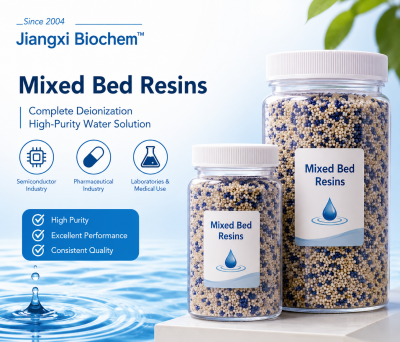
To bypass these thermodynamic limits, process engineers deploy a Mixed Bed Resin system. By physically blending cation and anion polymers into a unified matrix, the configuration acts like thousands of alternating micro-two-stage columns operating in a continuous loop. The immediate cross-neutralization of H⁺ and OH⁻ continually drives the local chemical equilibrium forward, achieving exceptional ionic purity (resistivity exceeding 18.2 MΩ·cm at 25°C).
| Resin Architecture Group | Functional Ionic Exchange Format | Targeted Solute Removal Matrix | Optimal Regeneration Vector |
|---|---|---|---|
| Cation Exchange Resin | Strong Acid Cation (SAC) / H⁺ Form | Ca²⁺, Mg²⁺, Na⁺, Fe³⁺ Metallic Cations | 1%–4% Dilute Hydrochloric Acid (HCl) |
| Anion Exchange Resin | Strong Base Anion (SBA) / OH⁻ Form | Cl⁻, SO₄²⁻, SiO₂ (Silica), Organic Acids | 2%–4% Dilute Sodium Hydroxide (NaOH) |
| Mixed Bed Resin | Homogeneous SAC/SBA Polymer Matrix Blend | Residual Trace Ions, Colloidal Impurities | Hydraulic Stratification followed by Split Injection |
.png)
Maintaining high operating capacities over multi-year lifecycles requires managing system fluid dynamics. Linear velocities must stay within the specified operating window (typically 15 to 40 m/h) to guarantee proper contact times without triggering structural channel bypass or unacceptable head loss across the bed.
Furthermore, managing organic fouling in anion beds remains a priority for system operators. High-molecular-weight natural organic matter (NOM) carries negative charges that bind irreversibly to the interior exchange networks of strong base anion matrices. This phenomenon clogs up active exchange zones and causes prolonged rinse cycles and early silica slippage. Selecting macroporous matrices with broader internal pore structures can mitigate this hazard by improving mass transfer and allowing organic compounds to rinse out smoothly during backwashing cycles.
.png)
Industrial water treatment installations leave no room for guesswork. For long-term system stability, securing consistent batch-to-batch polymer cross-linking and precise moisture retention profiles is non-negotiable. At Jiangxi Biochem Co., Ltd., we deliver engineered separation solutions designed to protect critical downstream processes.
We specialize in supplying high-performance chemical components tailored for the global research and pharmaceutical development sectors. Our premium Ion Exchange Resin Series—featuring our optimized Cation Exchange Resins, highly fouling-resistant Anion Exchange Resins, and high-purity Mixed Bed Resins—is manufactured under strict quality management frameworks to ensure complete batch-to-batch reproducibility across commercial systems.
Latest Blogs & News
Products
Contact us
Add: 1-6F, No.118 Xinzhou Road, Xihu District, Nanchang, Jiangxi, China Post: 330025
Tel:+86-791-86629460
E-mail: iceleng@biochemjx.com